


Saved homes live in this browser. View your saved homes
1990s wood house in Okuchisato, Isa
Isa, Kagoshima
- Year built
- 1990
- Building size
- 125.72 sqm
- Land size
- 670 sqm
- Structure
- Wood


About this home
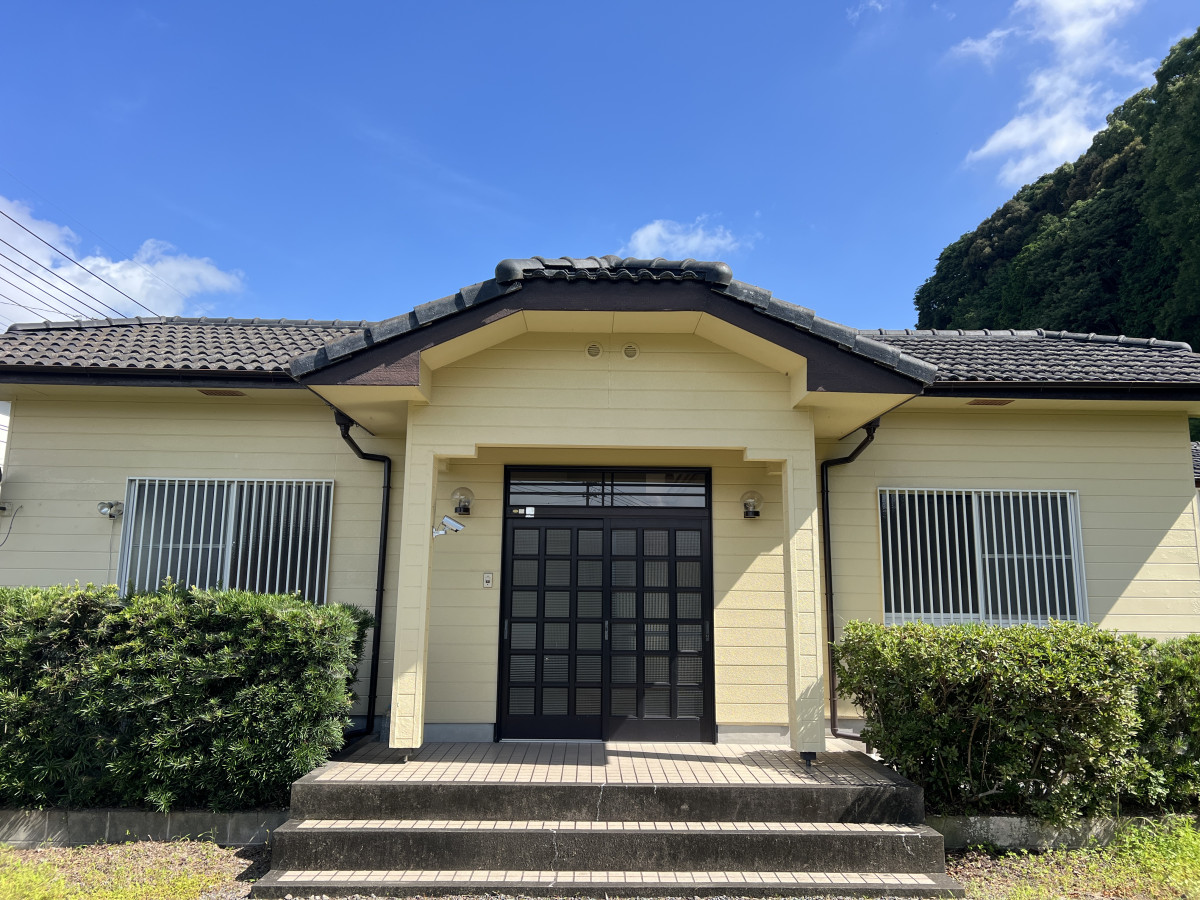
From the listing Cream-yellow exterior that stands out beautifully against the blue sky, hello from Tanaka. While Isa, called Hokkaido of Kagoshima for its harsh winter cold, experiences decidedly hot summers typical of its basin location, with morning temperatures dropping to a chill, managing the dramatic daily temperature swings seems to be an eternal theme for all living things here. This property is located in the central Oguchi area, the Sato district. All schools, primary, middle, and high, are within 1 km, and the distance to Oguchi High School pictured on the left is so close you could practically jog there in 10 seconds. A tile-paved entrance porch easy to clean, symmetrical entrance lighting. Soft-colored exterior walls and settled black entrance door create a clean, tidy entrance, so well-arranged that you naturally straighten your posture and think "excuse me, I'm coming in!" Upon entering, you feel a pleasant sense of recognition. The spotless entrance tiles and lustrous flooring bear the story of a life lived carefully and considerately; this is a property that conveys a good, clean atmosphere. On the right side of the entrance: a 7.5-mat Western-style room with air conditioning, perhaps used as a reception room or home office. With two windows, it should have good air circulation. Also on the right: a 6-mat tatami room with two windows for good ventilation and generous storage, lovely. I have some old farmhouse DIY experience, and just replacing wallpaper or painting the ceiling makes a dramatic difference. Even using removable washi tape on sliding doors transforms a room's feel. The current retro-fan atmosphere is charming, but customizing it to your taste is part of the fun. Next to that tatami room: another 6-mat tatami room. Because it adjoins the living room (detailed next), it should be quite practical. Storage is consolidated on the former tatami room's side; storage between rooms also offers sound insulation and insulation benefits. The air conditioning here is a definite plus. The living room adjacent to the tatami room is clean and spacious. The large sink is nice, but I especially want to praise the storage shelf subtly placed beside it. The bath and wash spaces are accessed through the living room. Having the living room close to the dressing room should ease temperature swings that make changing rooms uncomfortable. The washing machine area, washbasin, and dressing room all have solid storage. Large enough to consolidate towel storage and bath-related supplies. The bath finishes in a refreshing mint-green tiled surface. It reminds me of my childhood home's bath, on sweltering summer days we'd fill it with cool water and plenty of ice to refresh ourselves. Quite emotional. Immediately past the living room is a toilet with exceptional, large-capacity storage. After renovating old farmhouses, I noticed that old houses and traditional homes often have storage limited to closets or built-ins; storage space is surprisingly scarce. This Heisei-era property's remarkable storage capacity is genuinely appealing. Even with a large family, a life free of clutter seems achievable. The toilet has a men's urinal at the front and a flush toilet in back. I want to give a thumbs-up to the handrails on both sides, the large ventilation window, and the easy-to-clean, smooth floor material. The interior tour is nearing its climax. What awaits beyond this beautifully lit hallway? A 6-mat two-bay tatami room. You probably see it coming by now, yes, another tatami room with outstanding storage. That eye-catching built-in shelf, what treasures would you display? Or perhaps a favorite cat's perch? With no lights on, even at 10 a.m. on a July morning during our visit, it's remarkably bright. A pleasant tatami room where the room tour concludes. Actually, this property has another building on the grounds. It was used as a Japanese sweet shop manufacturing and retail space until about three years ago. We couldn't confirm its interior during the shoot, but it could be ideal for someone in food manufacturing and sales, or anyone needing a separate studio or office from their residence. For details, please contact the real estate agent! May this property meet its ideal new owner. / Remarks: This vacant property is, after all, a pre-owned residence and is rarely in perfect condition like a new build. When viewing or purchasing, we ask that you carefully confirm detailed information about the property with the real estate agent and owner, and proceed only after you are satisfied. [Examples of items to confirm:] • Whether there is any rain leakage • Whether there is termite damage • In the case of a property with groundwater or mountain spring, whether the water quality meets your intended use (see Ministry of Health, Labour and Welfare guidance) • Boundary matters and site-specific issues, and the relationship with neighbors • Because the surroundings are rich in nature, insects and animals appear... and so forth, there's no end to it, but doing pre-checks on what you can in order to minimize the gap of "this isn't what I expected..." is important.
Specifications
Where a detail is not shown, the source listing did not state it. We leave it out rather than guess.

The price in context
11,940 yen
Asking price per sqm of land
13,300 yen
Nearest official land benchmark, per sqm
The nearest official land-price benchmark is about 13,300 yen per sqm, down about 9% over five years (14,600 to 13,300), which the survey classes as declining.
The asking price works out at about 11,940 yen per sqm of land, 10% below the nearest residential benchmark of about 13,300 yen per sqm.
Source: Japan's Ministry of Land land-price survey. A benchmark for the area, not a valuation of this home.

Area and hazard data
7 checks clear. Each check is against a government map for this exact point. Where a map is missing or we can't use it, we say so; that never means there's no risk.
Checks clear
-
Earthquake code
Checked, clearBuilt after the 1981 earthquake code
Source: Estimated from year built
-
Strong-earthquake chance
Checked, clearAbout 3% chance of a strong quake (shindo 6-lower or above) in 30 years, low for Japan, where most places sit between 3% and 26%
Source: National earthquake-hazard model
-
Landslide risk
Checked, clearChecked: no designated landslide zone at this location. Zone edges are approximate, and this is not a legal property disclosure document.
Source: Government hazard map
-
Flood risk
Checked, clearChecked: outside a mapped flood area. The maps cover designated rivers only, so this is not a promise of no flooding.
Source: Government hazard map
-
Tsunami risk
Checked, clearChecked: no designated tsunami inundation zone at this location
Source: Government hazard map
-
Liquefaction
Checked, clearLow liquefaction susceptibility for the ground here
Source: National landform survey
-
Farmland rules
Checked, clearChecked: not in a designated farmland zone
Source: Government land-use records

Location
This marks an approximate area, not the exact building. The circle is a rough radius from the listing's published address, so you can see the neighbourhood without us guessing at a precise spot. The published address only names the neighbourhood.

Rules of this akiya bank
These are the bank's published eligibility rules, not confirmation that your intended use of this home is allowed. Check with the municipality and owner.
We have not established these rules for this listing. Unknown does not mean permitted.
-
Bank rule on living in the home
Unknown. No published residence rule has been established for this listing.
The bank or the town can say whether buyers are expected to live in the home.
-
Bank rule on business use
Unknown. No published business-use rule has been established for this listing.
The bank can say whether guest stays fit its rules.
-
Bank rule on resale
Unknown. No published resale rule has been established for this listing.
The bank can say whether a resale restriction applies.

Thinking of renting it out?
What the published rules and maps say about letting this home to short-stay guests, line by line, with sources. This is not a verdict or advice. The town, the bank and the licensing office have the final word.
In Japan, home-sharing (minpaku) under the national home-sharing law is capped at 180 nights a year. A ryokan or inn licence is a separate route with its own building and zoning rules.
-
Local home-sharing ordinance
No home-sharing ordinance for Kagoshima Prefecture appears in the Japan Tourism Agency list of 1 April 2021.
That is not a statement that home-sharing is allowed here: the list may be out of date, and the national rules still apply.
Japan Tourism Agency ordinance listList dated 2021-04-01
-
Zoning for hotels and inns
Unknown. Zoning data for this spot is not loaded yet.
Unknown does not mean permitted. The town's planning desk holds the zoning map.
-
Urbanisation control area
Unknown. Area division data is not available for this spot.
Unknown does not mean permitted. The town's planning desk can say whether the home is in an urbanisation control area.
-
Heavy-snow designation
This home is not in a designated heavy-snowfall area.
One running cost fewer to plan for, though local winters still vary.
Heavy-snow areas (MLIT)FY2016 data, read 2026-10-04
-
Distance to an airport and the shinkansen
Nearest airport about 28.4 km, nearest shinkansen station about 24.1 km, in a straight line.
How easily guests arrive shapes demand. Road and rail journeys are longer than these distances.
Airports (MLIT)FY2021 data, read 2026-10-04
Rail stations (MLIT)FY2025 data, read 2026-10-04

Grants and rules
9 programmes in our data could apply to this home, 7 with conditions you would have to meet first. Amounts change every year. Always confirm with the town before you rely on a figure.
All grants in Isa-
Migration Support Payment Program
Up to 1,000,000 yenWhat you would need
Base payment for 2+ household members; additional payments available
- Must have resided cumulatively 5+ years in Tokyo 23 wards within the 10 years before transfer, or resided in Tokyo metropolitan area (excluding designated disadvantaged areas) and commuted to Tokyo 23 wards
- Plus 2 more conditions on the town's page.
Official source for Migration Support Payment Program (opens in a new tab)
-
Regional Revitalization Migration Support Program (Household)
Up to 1,000,000 yenWhat you would need
Base amount for household migration: up to 1 million yen. Additional 1 million yen per child under 18 may be added (stackable add-on, not included in base cap).
- Resident of Tokyo 23 wards or commuting to Tokyo 23 wards from Tokyo Metropolitan Area (excluding disadvantaged regions)
- Plus 3 more conditions on the town's page.
-
Tokyo-Area Migration Support Subsidy
Up to 1,000,000 yenWhat you would need
Multi-person household: 1,000,000 yen. Single person: 600,000 yen. Additional 1,000,000 yen per minor (under 18) brought along after 1 April 2023.
- In 10 years before moving to Isa, spent cumulative 5+ years in Tokyo 23 wards or non-disadvantaged Tokyo metro areas, AND commuted to Tokyo 23 wards
- Plus 2 more conditions on the town's page.
Official source for Tokyo-Area Migration Support Subsidy (opens in a new tab)
-
Regional Revitalization Migration Support Program (Single)
Up to 600,000 yenWhat you would need
Base amount for single migration: up to 600,000 yen.
- Resident of Tokyo 23 wards or commuting to Tokyo 23 wards from Tokyo Metropolitan Area (excluding disadvantaged regions)
- Plus 3 more conditions on the town's page.
Official source for Regional Revitalization Migration Support Program (Single) (opens in a new tab)
-
Combined Wastewater Treatment Tank (Septic) Subsidy
Up to 548,000 yenWhat you would need
Base: 332,000 yen (5-person), 414,000 yen (7-person), 548,000 yen (10-person tank). Add 50,000 yen if local contractor used. Additional up to 90,000 yen for removal or up to 150,000 yen for in-house plumbing when converting from septic or pit toilet.
- Must install combined treatment tank or convert from single-treatment septic or pit toilet
Official source for Combined Wastewater Treatment Tank (Septic) Subsidy (opens in a new tab)
-
Dangerous Vacant Building Demolition Subsidy
Up to 200,000 yenWhat you would need
20% of eligible demolition costs, capped at 200,000 yen; amounts below 1,000 yen discarded.
- Must not be in default on city taxes. Must be owner of the dangerous building or delegated by owner to execute demolition.
- Plus 1 more condition on the town's page.
Official source for Dangerous Vacant Building Demolition Subsidy (opens in a new tab)
-
Migration & Home Exchange Promotion Subsidy Program
Base rate 1/5 of eligible costs capped at 500,000 yen for renovation; additional add-ons for migrants, age, families with children, and small settlements when base costs exceed 2.5 million yen.What you would need
- Migrant: resided continuously outside the municipality for 10+ years AND transferred to Isa within 3 years before application or by end of the application fiscal year
- Plus 3 more conditions on the town's page.
Official source for Migration & Home Exchange Promotion Subsidy Program (opens in a new tab)
-
Isa City Wooden Housing Seismic Diagnosis & Retrofit Subsidy
Up to 1,150,000 yenWhat you would need
Seismic diagnosis: 2/3 subsidy rate, max 60,000 yen. Retrofit work: 8/10 subsidy rate, max 1,150,000 yen (changed July 2025).
- Must be resident or owner of the wooden house. If owner and resident differ, both must consent. Must not be in default on municipal taxes.
- Plus 1 more condition on the town's page.
-
Hazard-Proximity Dangerous House Relocation Subsidy
Demolition/relocation: max 975,000 yen. Construction/purchase/renovation: interest subsidy on loans (max 8.5% annual rate). Land acquisition: max 2,060,000 yen. Site development: max 608,000 yen.What you would need
- Must demolish and relocate, or construct/purchase/renovate replacement housing
Official source for Hazard-Proximity Dangerous House Relocation Subsidy (opens in a new tab)

How to buy: through the town.
This home is on the Isa akiya bank. The town puts you in touch with the seller and explains its rules.
If the town says a local estate agent handles the sale, Koryoya can help you in English. Ask us.
- Free to ask us. We read the listing with you, help with the Japanese and explain each step.
- There are always some costs, such as registration and legal fees, even for a free house.
Interested in this house?
A founder replies by email. Free to ask.
More homes in Isa
9 other homes currently listed in Isa.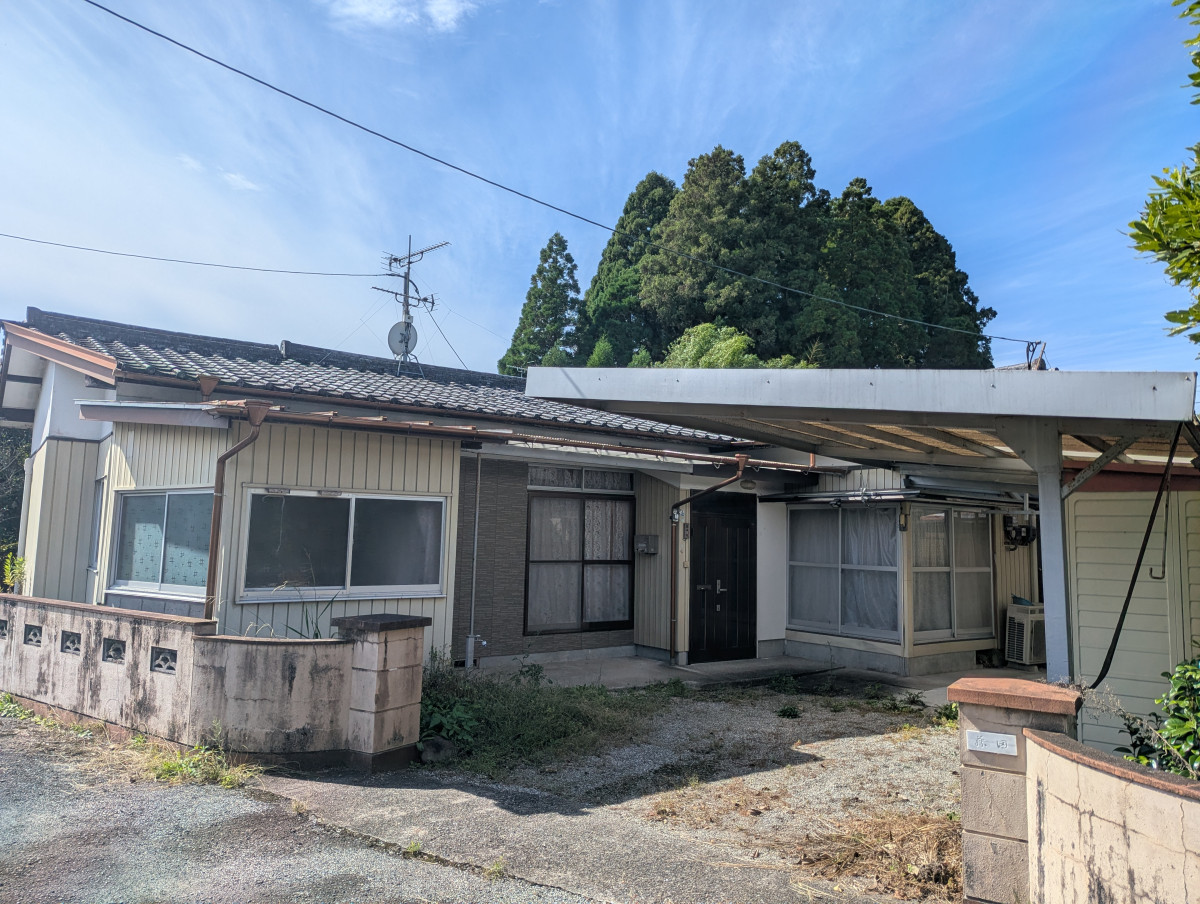
Isa, Kagoshima
1970s wood house in Isa, Kagoshima, farmland, approval needed
1,900,000 yen
(approx. GBP 9,000)

Isa, Kagoshima
1940s wood house in Isa, Kagoshima, farmland, approval needed
4,900,000 yen
(approx. GBP 23,000)

Isa, Kagoshima
1970s wood house in Isa, Kagoshima
3,900,000 yen
(approx. GBP 18,000)
Before you buy
Where this data comes from
Every fact on this page comes from the town's own listing or an official government record, checked for this address. Where a fact is missing, we say so rather than guess.
- Landslide-risk areas, from Japan's Ministry of Land mapping data (KSJ A33).
- Flood-risk areas, from Japan's Ministry of Land mapping data (KSJ A31a).
- Tsunami-risk areas, from Japan's Ministry of Land mapping data (KSJ A40).
- Earthquake-hazard forecast, from the national J-SHIS model (2024).
- Farmland rules, from Japan's Ministry of Land mapping data (KSJ A12).
- Stations, coastline and schools, from Japan's Ministry of Land mapping data.
- Official land prices, from Japan's Ministry of Land land-price survey.
Map data: National Land Numerical Information (Kokudo Suchi Joho), Ministry of Land, Infrastructure, Transport and Tourism, processed by Engawa.
出典:「国土数値情報」(国土交通省)(https://nlftp.mlit.go.jp/ksj/)をEngawaが加工して作成
We re-check listings against their sources through the week. Where a fact is missing, we say so rather than guess. Data from the source listing plus official government records.